Key Strategies for Reducing Costs Across Your Supply Chain
Freight Handling

Managing supply chain costs is about more than finding lower transportation rates. Inefficient routes, excess inventory, unnecessary handling, and poor coordination can all increase operational expenses over time. By improving how goods are planned, moved, stored, and distributed, businesses can reduce unnecessary costs while maintaining reliable service.
Transportation is often one of the largest costs within a supply chain. Inefficient routes, empty capacity, and unnecessary transfers can increase expenses without adding value to the operation.
Solution: Review routes regularly and evaluate distance, shipment volume, delivery requirements, and available transportation options. Better route planning can reduce unnecessary travel while improving overall transportation efficiency.
Sending multiple smaller shipments separately can increase transportation and handling costs. When shipment schedules and destinations allow, combining compatible cargo can improve capacity utilization.
Solution: Identify shipments that can be consolidated based on destination, timing, and cargo requirements. Consolidation can help reduce the number of trips while making better use of available transportation capacity.
Excess inventory can increase storage, handling, and capital costs, while insufficient stock can lead to urgent shipments and missed sales opportunities.
Solution: Use accurate inventory data and demand forecasting to maintain appropriate stock levels. Better planning can help businesses avoid unnecessary storage while keeping products available when needed.
Every additional movement of goods can add labor, time, and potential risk to the logistics process. Poor coordination between transportation, warehousing, and distribution can create unnecessary handling.
Solution: Review how goods move through each stage of the supply chain and identify opportunities to reduce transfers. Streamlined workflows can lower handling costs while improving operational efficiency.
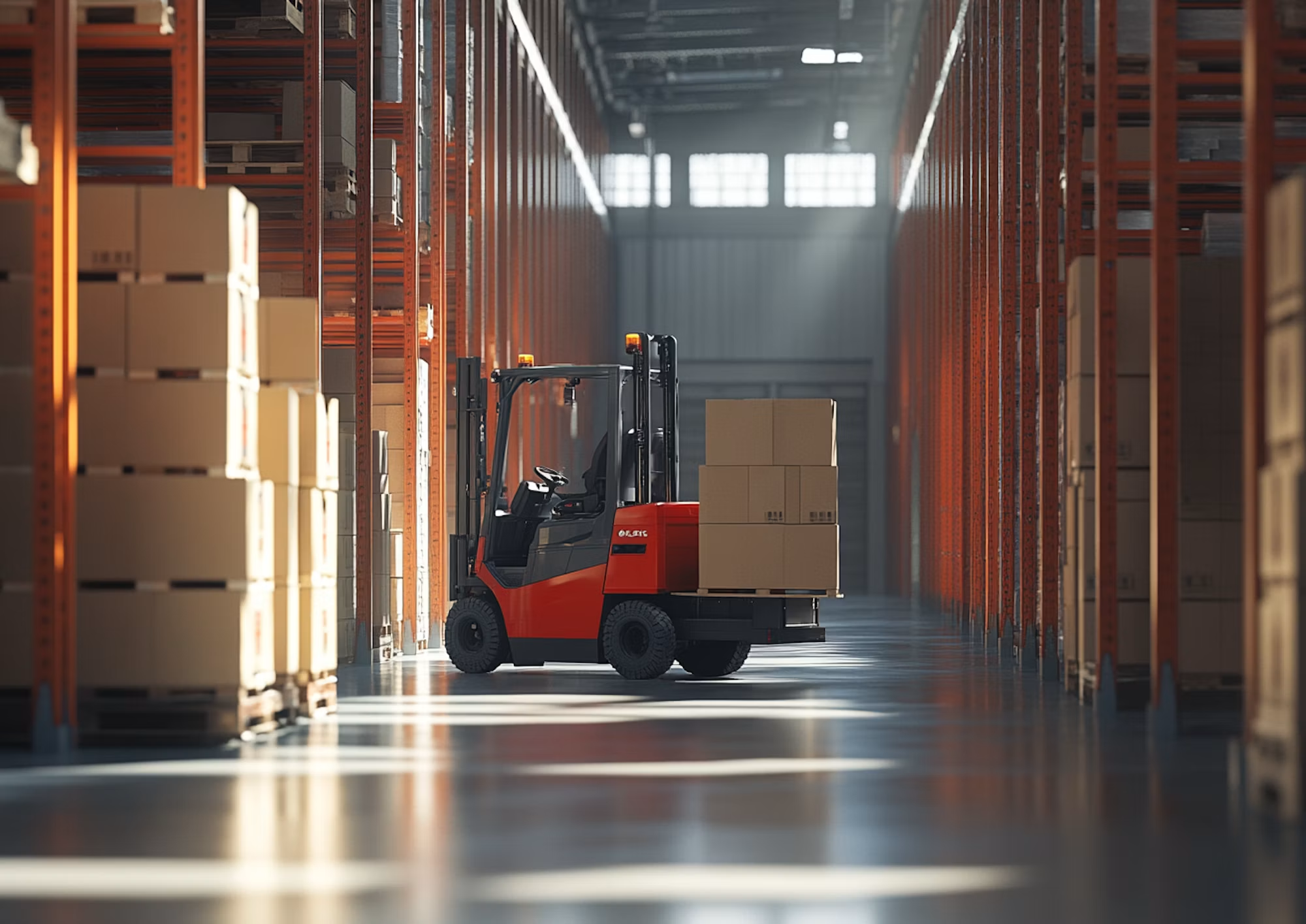
Underutilized or poorly organized warehouse space can increase operating costs and create unnecessary movement. Efficient storage planning can help businesses get more value from existing facilities.
Solution: Optimize storage layouts, inventory placement, and warehouse utilization based on product characteristics and movement frequency. Better space management can improve accessibility while reducing unnecessary operational activity.
Limited visibility can make it difficult to identify where costs are accumulating. Without accurate information, businesses may continue inefficient routes, processes, or inventory practices without realizing their impact.
Solution: Use tracking, inventory data, and operational reporting to identify recurring inefficiencies. Better visibility allows teams to make informed decisions and focus improvement efforts where they can have the greatest impact.
“Reducing logistics costs is not about moving less—it is about moving smarter, with fewer unnecessary steps along the way.”
Effective cost management requires a clear view of the entire supply chain. By optimizing transportation, consolidating shipments, improving inventory planning, reducing unnecessary handling, and making better use of warehouse capacity, businesses can create more efficient logistics operations without compromising reliability. Small improvements across multiple stages can create meaningful savings while supporting stronger long-term supply chain performance.